November 23, 2026
Moss wall placement: humidity, sunlight, and display tips for lasting color
By @mossandtimber
Why placement matters for preserved moss wall art
Preserved moss wall art brings a soft, natural texture indoors without the maintenance that live plants require. The moss has been treated to stay green and flexible for years, but its appearance still depends on where you put it. Sunlight, humidity, and air movement all affect how the preserved material looks over time. Understanding these factors helps you choose a spot where the piece keeps its color and form.
Unlike live moss, preserved moss no longer grows or needs water. The preservation process replaces the natural moisture with a glycerin-based solution that keeps the cells plump and flexible. This makes the moss stable in most indoor conditions, but extreme environments can still cause fading, brittleness, or dust buildup. The goal is to find a location that protects the preserved structure while letting the texture and color show at their best.
Light exposure and color stability
Preserved moss is sensitive to direct sunlight. Ultraviolet rays break down the dyes and natural pigments used during preservation, leading to a faded, yellowish, or bleached look over several months. Even indirect light through a window can cause gradual change if the piece sits in a bright spot all day.
The safest placement is in a room that receives indirect light or moderate ambient light. North-facing windows, hallways without direct sun, and interior walls away from windows work well. If you want the moss near a window, choose an east- or west-facing one where the sun hits for only a short period, or use sheer curtains to diffuse the light. South-facing windows in the northern hemisphere produce the strongest light and should be avoided unless the moss is set back several feet from the glass.
Artificial light from LEDs or fluorescents is generally safe because it contains very little UV. Spotlights or gallery lights aimed directly at the moss can generate heat, which may dry out the preserved material over time. If you use accent lighting, keep the fixture at least a foot away and use a low-wattage bulb to reduce heat exposure.
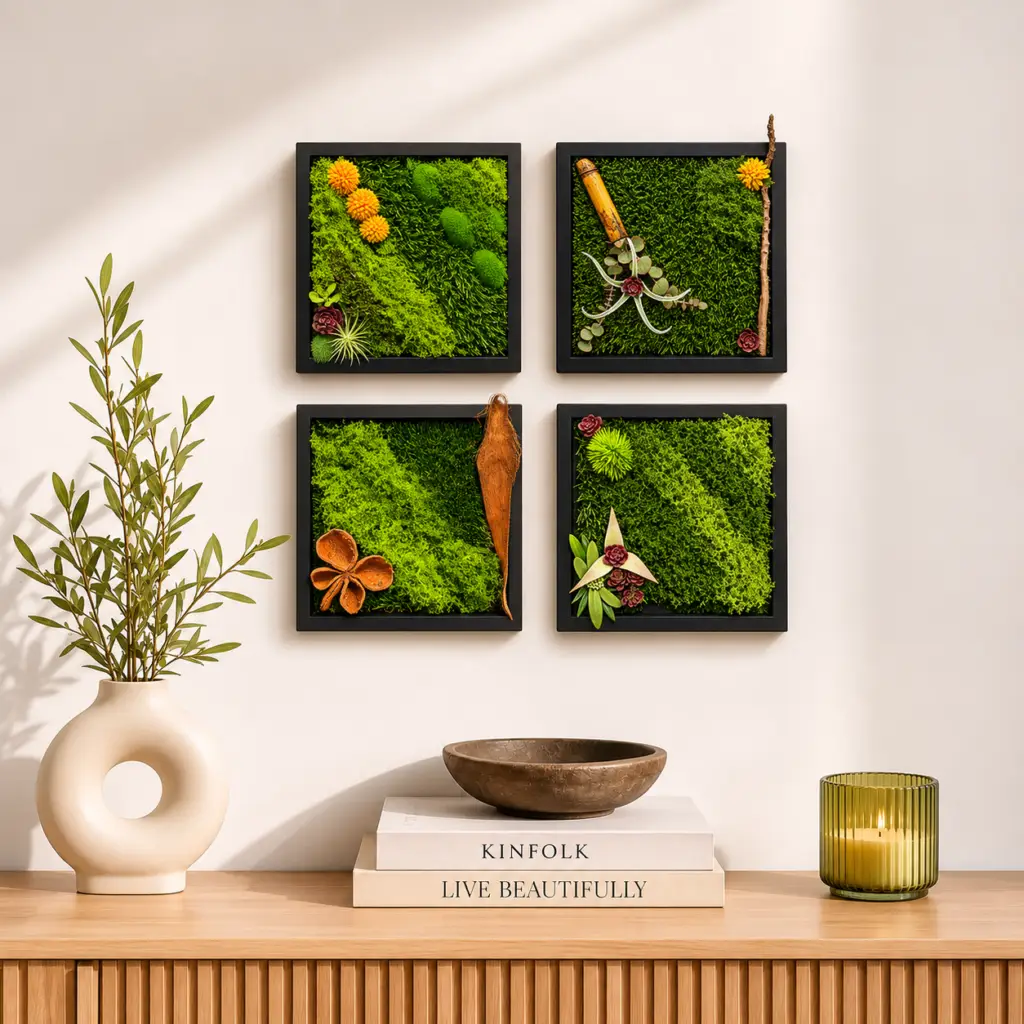
What to watch for with light damage
Fading often appears first on the outer edges or raised parts of the moss that catch the most light. You might notice the green turning slightly yellow or brown, especially in species like reindeer moss that have a lighter natural color. Once fading occurs, it cannot be reversed. The only remedy is to replace the affected section or accept the patina as part of the piece's aging.
Some fading can be slowed by rotating the artwork periodically if one side faces a light source. But the better approach is choosing the right spot from the start. If the room has strong sunlight for more than two hours a day, consider a different wall or a location where the light is always indirect.
Humidity and moisture control
Preserved moss does not need water, but it still responds to the humidity of the room. The glycerin inside the cells attracts and holds a small amount of moisture from the air. In very dry conditions, the moss can become stiff and brittle. In very humid conditions, the surface may feel slightly damp or develop condensation, especially if the piece is in a bathroom or kitchen.
Most indoor spaces fall within a comfortable range for preserved moss. A relative humidity of 40 to 60 percent is ideal. Below 30 percent, the moss may start to lose its suppleness. Above 70 percent, you risk moisture buildup on the backing board or frame, which could lead to mold or warping over time. A simple hygrometer placed near the artwork gives you a reading so you can adjust the room's humidity if needed.
Bathroom and kitchen placement
Bathrooms and kitchens are popular for moss wall art because the natural look fits well with tiles, wood, and neutral palettes. The steam from showers or cooking raises humidity temporarily, which is usually fine as long as the room has good ventilation. An exhaust fan or open window after use helps keep moisture from lingering on the moss surface.
If the bathroom has no window or fan, the humidity may stay high for long periods. In that case, choose a spot away from the shower or sink, and consider a smaller piece that can be easily dusted and checked. The same logic applies to kitchens: place the moss away from the stove and sink, where steam and grease are concentrated. Grease particles can stick to the moss fibers and attract dust, making cleaning harder.
Air movement and dust accumulation
Preserved moss acts like a natural dust collector. The fine textures and crevices trap airborne particles, especially in rooms with forced-air heating, ceiling fans, or open windows. Dust buildup dulls the color and makes the moss look tired. Regular, gentle cleaning keeps the piece fresh.
For dust removal, a soft brush or a hairdryer on the cool, low setting works well. You can also use compressed air in short bursts. Avoid rubbing or pressing hard, as that can break the preserved fibers. A light pass once a month is usually enough. If the moss is in a hallway or entryway where more dust collects, you might need to clean it every two weeks.

Placement away from air vents, drafty windows, and doorways reduces the amount of dust that settles on the surface. If the room has a ceiling fan, avoid positioning the moss directly under it. The constant airflow carries more dust and also dries the moss faster, which can accelerate brittleness over the years.
Temperature and environmental extremes
Preserved moss is stable at normal indoor temperatures between 60 and 80 degrees Fahrenheit. It does not tolerate freezing or prolonged heat above 90 degrees. If the wall is near a radiator, fireplace, or space heater, the heat can dry out the glycerin and cause the moss to shrink or crack. Similarly, cold drafts from an uninsulated exterior wall or window can make the moss feel stiff and brittle.
Check the wall surface temperature before mounting the piece. An exterior wall in a cold climate may stay cool enough to affect the moss during winter. In summer, a wall that gets afternoon sun can become warm enough to stress the preserved material. A simple test is to hold your hand against the wall for a few seconds. If it feels noticeably cold or hot, consider a different location or add an insulating backing to the frame.
Placement tips for different rooms
Living rooms and offices are ideal because they usually have stable temperature and humidity, and the light can be controlled with blinds or curtains. A moss panel behind a desk or sofa adds texture without competing with other decor. Neutral palettes and natural materials like wood, stone, or linen complement the moss well.
In bedrooms, avoid placing the moss above a radiator or directly under an air conditioning vent. The temperature changes during sleep cycles are fine, but constant airflow from the vent can dry the moss. A wall opposite the bed, away from windows and doors, gives a calm focal point without exposure to drafts.
Entryways and hallways tend to have less natural light, which benefits color stability. But they also see more dust and occasional bumps from people or bags. Choose a location that is out of the main traffic path, and consider a recessed frame that protects the edges of the moss.
For commercial spaces like offices, restaurants, or retail stores, the same principles apply. The moss should be placed away from direct sun, heating vents, and high-traffic areas where it might be touched. A lobby or waiting area with controlled lighting works well. If you are looking for inspiration or want to see how different species and frame styles handle various conditions, mosswallart.design offers a range of ready-to-hang pieces that can give you an idea of what works in a real interior.
Long-term care and expectations
Preserved moss is durable, but it is not indestructible. With the right placement, a piece can stay attractive for several years before the color begins to shift naturally. Over time, even in ideal conditions, the moss may lighten slightly or develop a warmer tone. This aging is part of the material's character and can add depth to the display.

If you notice the moss becoming brittle or losing its flexibility, the room may be too dry. A small humidifier nearby or a tray of water placed near the piece (not on it) can raise the local humidity. If the moss feels damp or shows condensation, improve ventilation or move it to a drier spot.
Dust removal is the main routine task. A soft brush or cool hairdryer keeps the surface clean without damaging the fibers. Avoid any liquid cleaners or sprays, as they can disturb the preservation treatment and leave residues. If a spot gets marked, a gentle touch with a dry cloth may lift the mark, but stubborn stains are best left alone to avoid rubbing off the color.
The same placement and care tips apply whether you install a small framed panel or a large custom piece. A little attention to light, humidity, and airflow goes a long way in preserving the look of the moss. For those who want to explore different styles and mounting options, mosswallart.design provides finished pieces and kits that make it easy to bring preserved moss into a space. Understanding the environmental needs of the material helps you pick the right spot and enjoy the natural beauty for years without surprises.
❧